In December last year, the Prince Claus Fund Symposium was held in Sri Lanka for the first time, featuring an exciting series of art events in Colombo and Lunuganga, where projects by Prince Claus Fund Seed Awardees from the previous year were showcased.
The Prince Claus Fund was established on September 6, 1996 to honour HRH Prince Claus’s dedication to culture and his belief in its role in society’s development. Their mission is to support, honour, and connect artists and cultural practitioners in Africa, Asia, Latin America, the Caribbean, and Eastern Europe, especially where cultural expression faces challenges. Their vision is for a world where cultural expression is both free and valued.
Since its inception, the Fund has created opportunities for connection, exchange, and preservation of cultural heritage in various ways. The Fund provides support for artists and cultural practitioners through three Awards tailored to different stages of artists’ careers. The Fund receives support from the Dutch Ministry of Foreign Affairs, the Dutch Postcode Lottery, as well as private individuals and institutions. Additionally, they collaborate with similar organisations on joint calls for Mentorship Awards.
Amidst the vibrant art talks and discussions at the Prince Claus Fund Symposium held in Sri Lanka, I got the opportunity to meet HRH Prince Constantijn van Oranje, the honorary Chair of the Board of the Prince Claus Fund. Despite his demanding agenda, he graciously agreed to a Zoom interview where Sunday Observer engaged in a thoughtful dialogue addressing the core principles and initiatives of the Fund. In the exchanges, he shed light on the Fund’s strategic evolution, its commitment to amplifying diverse voices, and its pioneering efforts in fostering cultural development globally. Through the interview, Prince Constantijn offered valuable insights into the fund’s vision and future endeavours, emphasizing the importance of inclusivity, empowerment, and solidarity within the cultural landscape.
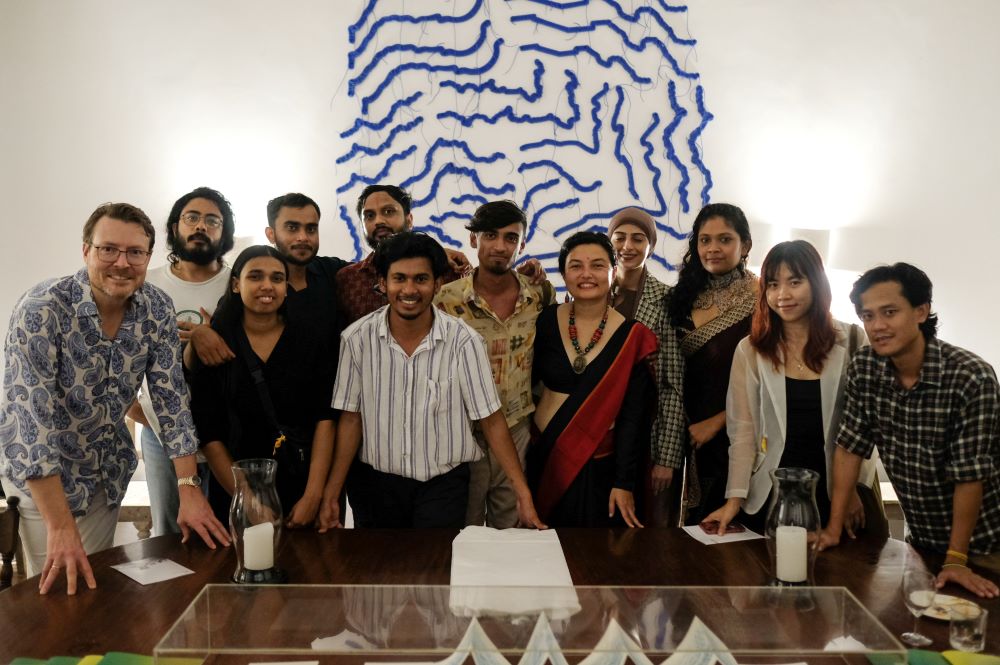
Prince Constantijn of the Netherlands with Seed Awardees at the Prince Claus Fund Biennial Symposium 2023 photographed by Diluckshan Puviraj.
The Fund’s Symposium in Sri Lanka
In a significant departure from tradition, the Prince Claus Fund Symposium found a new home in Sri Lanka for its annual gathering last year.
The decision to organise a biannual Symposium was implemented together with the new strategy, launched in 2021. This decision marked a deliberate shift away from the Fund’s Dutch-centric roots towards a more globally inclusive approach.
“As we restructured the Fund, we aimed to move away from being solely Dutch-centric,” in the zoom interview with Prince Constantijn he explained. “While we always operated with the philosophy of working locally and considering local conditions, we wanted to take this approach even further.”
Prior to launching a new strategy in 2021, the Fund used to organise a yearly Awards Ceremony in Amsterdam. Last year’s Symposium in Sri Lanka marked a new strategic shift with the organisation seeking out to broaden its horizons, organising events in various parts of the world to better engage with its diverse network of artists and cultural practitioners. The Impact Awards Ceremony in Amsterdam, now, is a biannual event and the Fund is gearing up for it in December this year.
“We began seeking countries where we had strong partners and where many of our recipients could easily attend,” he said. “South Asia emerged as a focal point for our efforts.”
Yet, finding the perfect host country presented its challenges, particularly considering the political landscape in the region. With elections and other political upheavals in neighbouring countries, the search for a suitable venue required careful consideration.
Ultimately, Sri Lanka emerged as the ideal destination. The country’s accessibility, coupled with its vibrant cultural scene and the presence of esteemed partners such as the Geoffrey Bawa Trust, made it an attractive choice for the Symposium.
“Sri Lanka offered the perfect blend of accessibility and cultural richness,” said Prince Constantijn. “The Geoffrey Bawa Trust, in particular, proved to be an excellent partner for us, facilitating our efforts and ensuring a seamless experience for all participants.”
Culture is a basic need
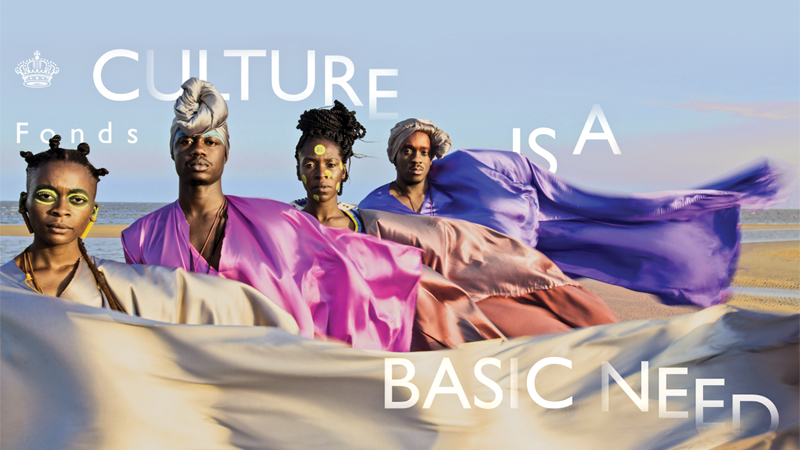
The theme of the symposium revolved around the intriguing concept that “culture is a basic need.” Prince Constantijn provided insights into the underlying principles of the Prince Claus Fund while delving into its ethos.
“’Culture is a Basic Need’ is one of the fundamental principles of our Fund,” he said. “It reflects our deep-rooted belief in the intrinsic value of culture within the development paradigm,” he said.
Established with a vision to promote culture in development, the Fund from its inception has championed the idea that true development must organically emanate from the grassroots level. Central to this philosophy is the recognition that culture and people are not just additional elements, but essential agents in the process of development.
“In the landscape of aid organisations at the time of our establishment, many focused solely on economic indicators, overlooking the significance of culture,” said Prince Constantijn. “However, we understood that culture is not only vital for identity and belonging, but also serves as a powerful tool for expression and societal critique.”
He acknowledged that culture is often overlooked and at risk, even though it’s crucial for shaping societies. From this realisation emerged a steadfast commitment to nurturing cultural development as a cornerstone of progress.
“Our belief is that economic and cultural development are deeply intertwined,” he said. “Culture, therefore, occupies a central place in our efforts to foster sustainable development and social cohesion.”
With a mission to support artists and cultural practitioners in regions where government support for the arts is limited, Prince Constantijn said the Fund will make sure fairness and representation for underrepresented regions such as Sri Lanka.
“We recognise the precarious position of culture, often endangered and neglected despite its pivotal role in shaping societies. Therefore, our approach to funding allocation prioritises both geographic diversity and the quality and impact of the applicants,” he said.
Central to the Fund’s selection process is the input of cultural practitioners themselves. “We rely heavily on recommendations from peers within the cultural community, ensuring that deserving persons are put forward for support. This approach not only fosters a sense of community empowerment, but also helps in identifying talented persons who might otherwise go unnoticed,” Prince Contsantijn said.
Presence and visibility
In recognition of the limited access to information, as well as issues with accessibility and visibility, particularly in certain regions, the Prince Claus Fund is dedicated to improving its presence and visibility in the areas where it operates. The Fund aims to create a more inclusive and equitable cultural landscape. “We conduct local labs and events to spotlight the Fund and engage with communities directly,” Prince Constantijn said.
Prince Constantijn acknowledges the necessity of broadening access to information. “We recognise the immense value in connecting individual artists with other cultural practitioners. Many of the artists we support struggle to secure funding and face challenges in amplifying their voices. They emphasize the need for both connections and financial support, which we endeavour to provide,” he said.
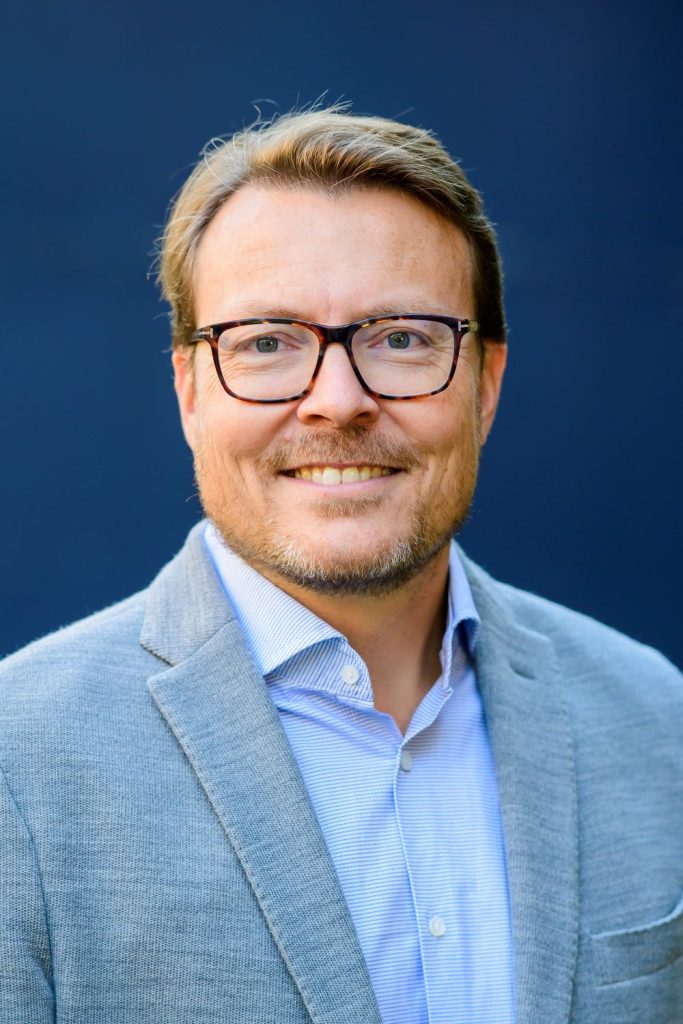
HRH Prince Constantijn van Oranje
Decolonisation
Today, the topic of decolonisation is gaining traction, particularly in light of recent events. Just days before the PCF Symposium held in Sri Lanka, the Dutch Government returned six artefacts, including a cannon, a ceremonial sword, and two guns, which were taken from Sri Lanka over 250 years ago. This gesture is part of efforts by the former colonial power to address historical wrongs.
However, as an Asian, it’s intriguing to observe that discussions surrounding colonisation, post-colonisation, and decolonisation primarily stem from Western perspectives. In recognising this observation, Prince Constantijn acknowledges the significance of diversifying voices in these discussions, a theme that was also prevalent at the PCF Symposium. “That’s a valid point,” he said. “At the Fund, we abide by the principle of “nothing about us without us,” aiming to provide a platform for diverse voices.”
He reflected on his experience at the symposium in Sri Lanka, where a different narrative on decolonisation emerged. “The symposium presented a different narrative on decolonisation, colonisation, and identity,” he said. “We aim to amplify various narratives rather than impose our own.” He emphasizes the importance of reckoning with history, acknowledging the suffering caused by colonialism and highlighting ongoing conversations around the biased nature of historical narratives. “Every story carries bias,” he said.
“Recognising the significance of ongoing conversations, we’re developing a mentorship program dedicated to revisiting historical narratives. This initiative aims to provide a platform for artists to question, explore, and elevate the histories of underrepresented communities,” he added.
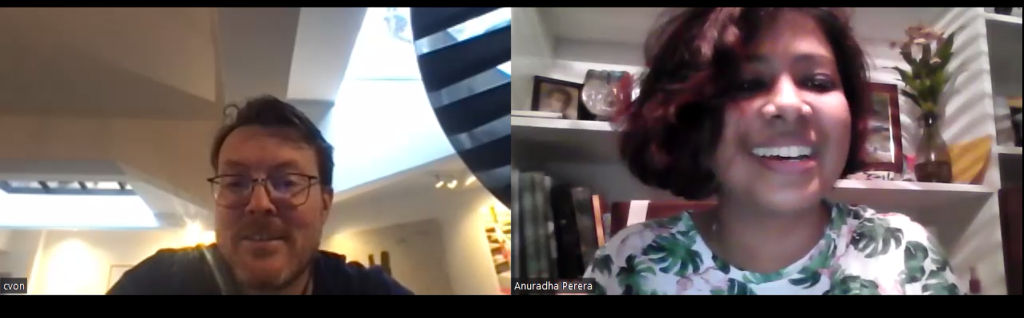
Interviewing HRH Prince Constantijn van Oranje via Zoom by Anuradha Kodagoda
Funding opportunities
Speaking about funding sources beyond the Prince Claus Seed Awards for Sri Lanka and Southeast Asia, Prince Constantijn outlined the additional options available. ‘In addition to the Seed Awards, we offer Impact Awards and Mentorship Awards.’
He elaborates on the application processes for each, noting that the Seed and Mentorship Awards have open calls, while the Impact Awards operate through a nomination process.
“The Impact Awards represent our largest funding source, offering a fewer but more substantial grants,” he said. These awards are presented biannually in the Netherlands at an Impact Awards Ceremony. Open calls for Seed and Mentorship Awards are announced multiple times a year. The next Seed Awards open call will be announced in December 2024.
Mentorship open calls are available at various times, with one currently open; further details can be found at www.princeclausfund.org.
When discussing the future plans of the Prince Claus Fund, particularly regarding the specific region, he highlights ongoing initiatives. ‘Our new mentorship program called Moving Narratives is currently in its pilot phase, with 12 artists set to participate.’ Additionally, the upcoming Impact Awards ceremony will be held in Amsterdam, signifying the Fund’s return.
“We envision the Seed Awards leading to progression through the Mentorship Awards programs and eventually towards the Impact Awards. Our goal is to build a global community of cultural practitioners, fostering connections and support.” He stressed the importance of solidarity within the Fund’s community, aiming to empower recipients amid challenging circumstances in their cultural, social, and political environments.